8th July 2008

More spar nutplates

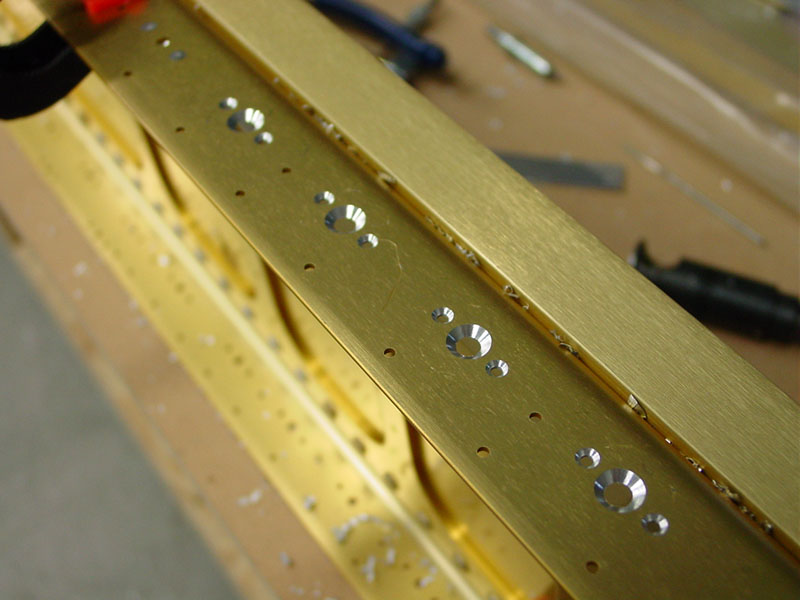
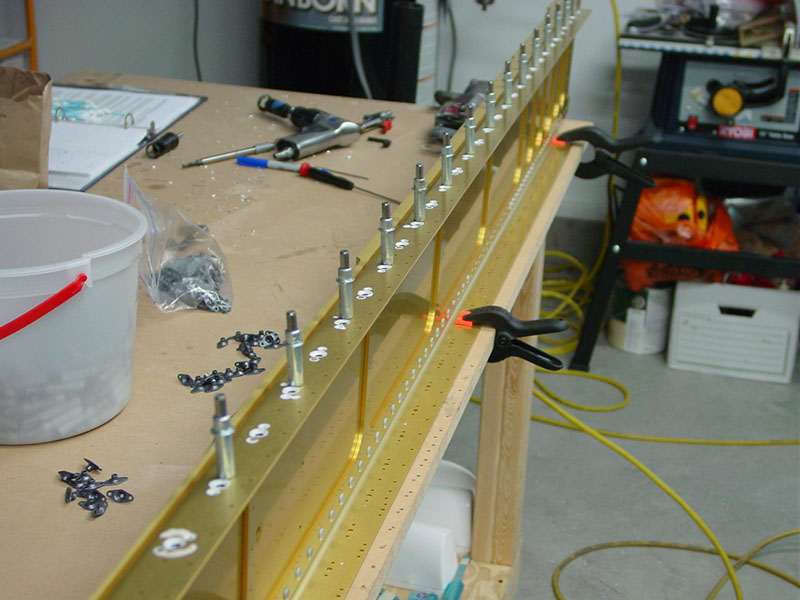
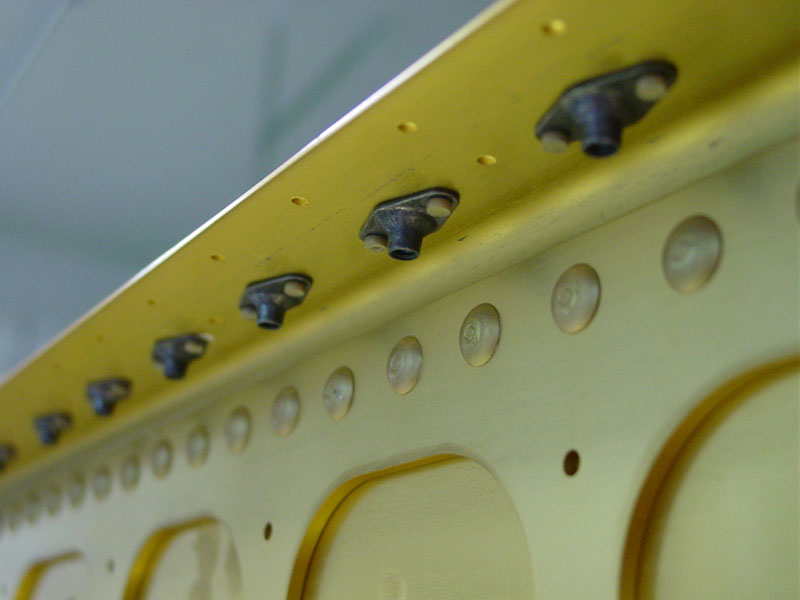
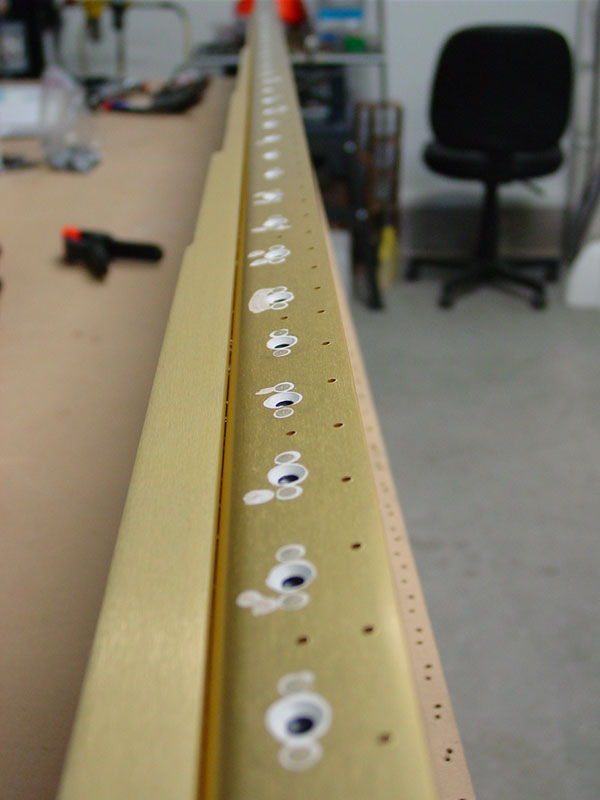
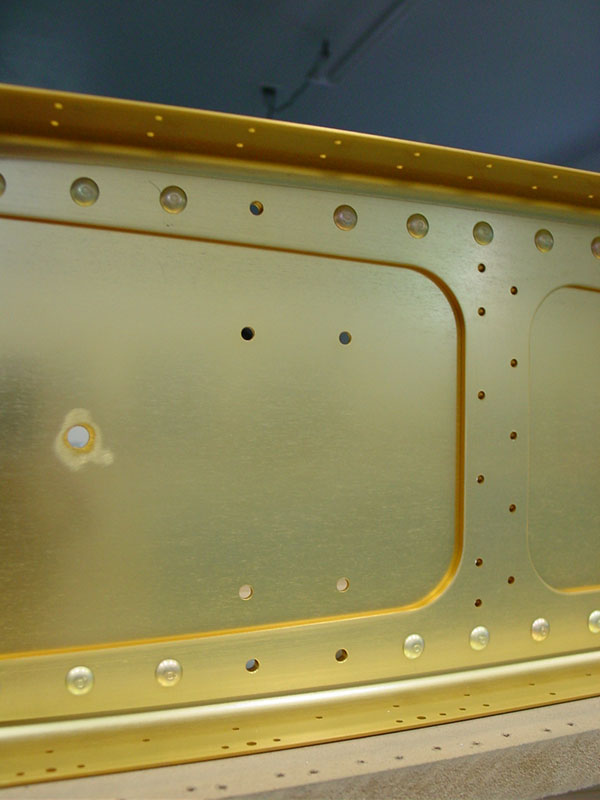
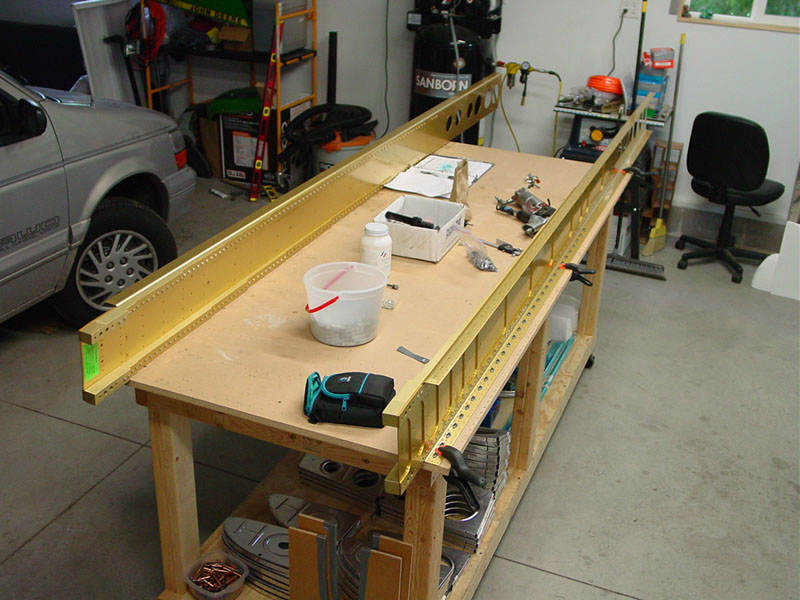
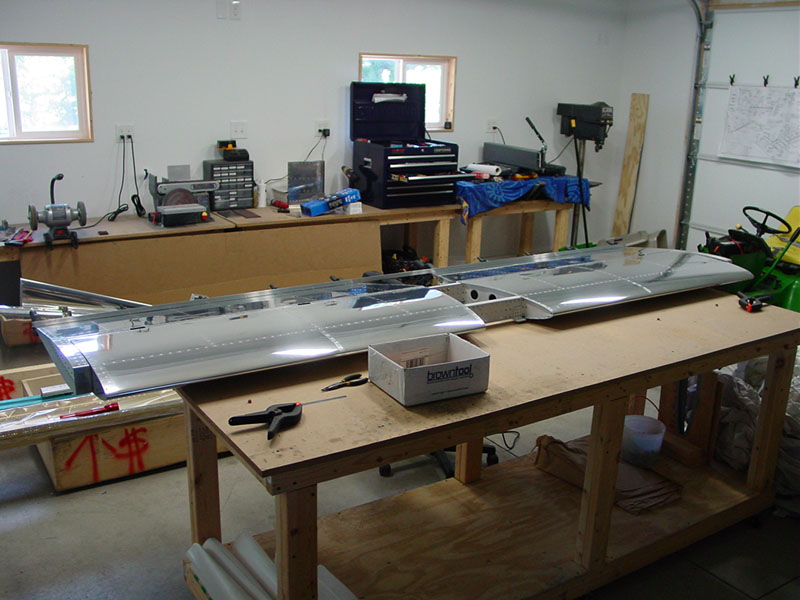
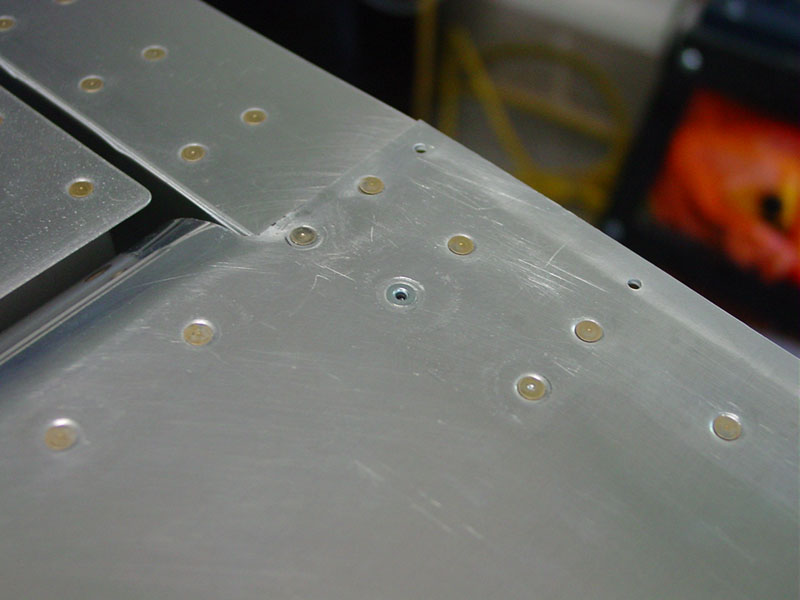
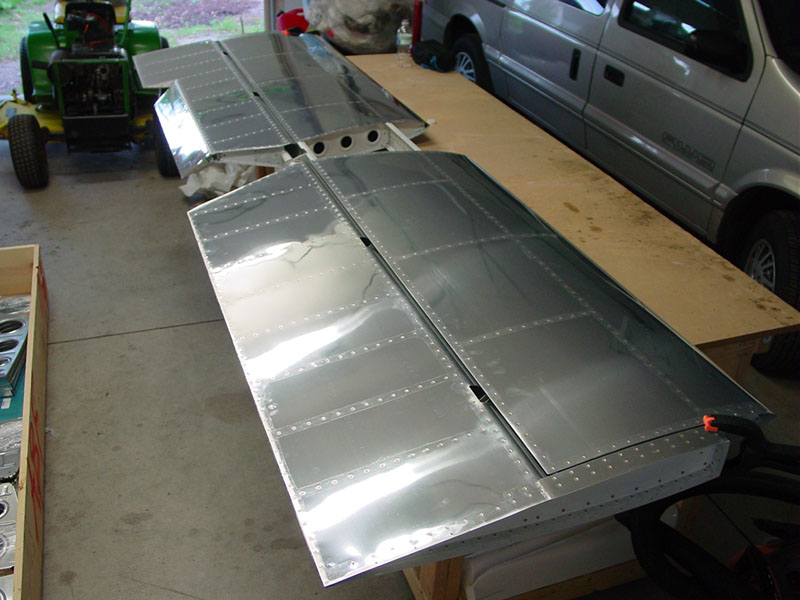
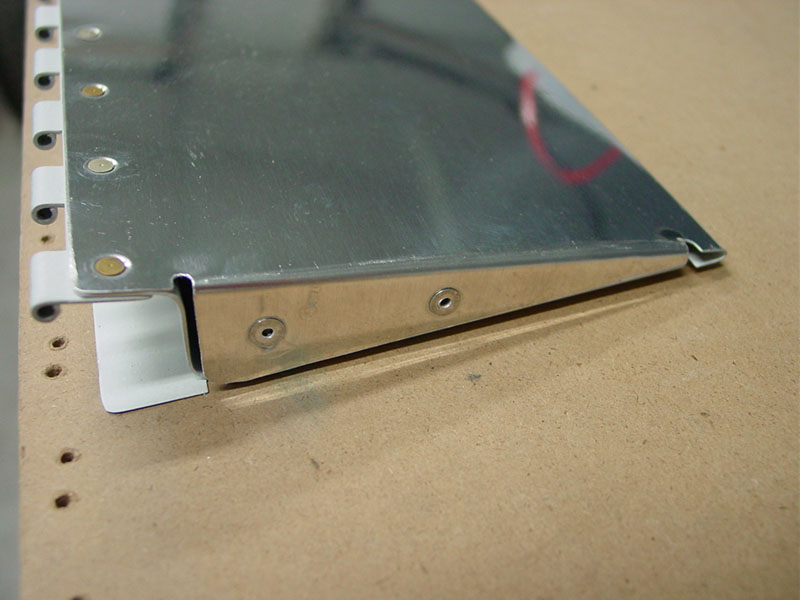
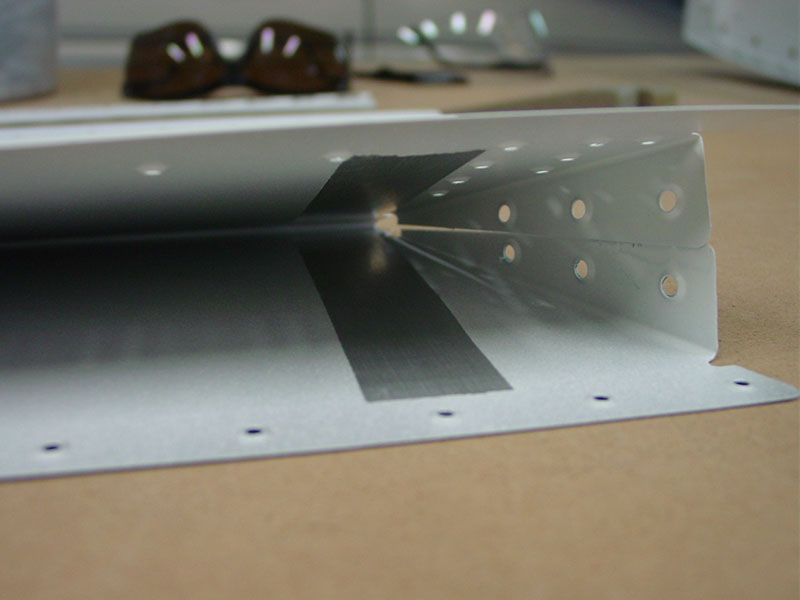
Finished drilling, deburring, countersinking, priming, and riveting the fuel tank attach nutplates to the lower flange of both spars.  Also attached the 24 access panel nutplates.  The next step in the manual is to attach the center section nutplates, which go on the spar web near the inboard end of each spar, two per wing.  These, I discovered, are the K1000-4 nutplates which were omitted from the kit when I received “Q Bag 1923″ instead of the “Bag 1923″ listed on the packing list.  Email sent to Van’s noting the inventory discrepancy.  Beyond that is the fabrication & attachment of the tie-down blocks.  I have no tap to cut the threads, so that might wait for now.  I did drill out the massive spar rivet that had been set in one hole meant for a bolt mounting the tie-down block–I guess someone at the factory just got carried away with the riveting.  For now, I guess I’ll have to get down to business and start prepping ribs.  Which reminds me…I need to order more scotchbrite supplies and some primer.

Hours: 2.4 | Posted in Spars & Skeleton | Comments Off

7th July 2008

Spar nutplates continued

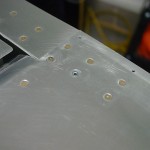
More drilling, countersinking, and deburring of spars for fuel tank & access plate nutplates. Completed the bottom of the right spar, and about half of the bottom left.  No pictures since it looks the same as yesterday’s work.

Hours: 1.9 | Posted in Spars & Skeleton | Comments Off

6th July 2008

Spar prep: nutplates

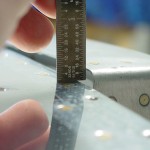
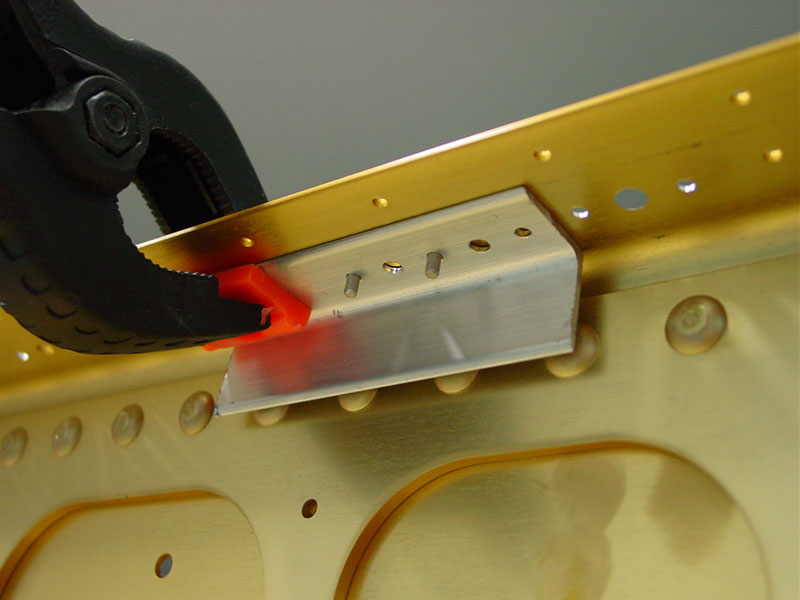
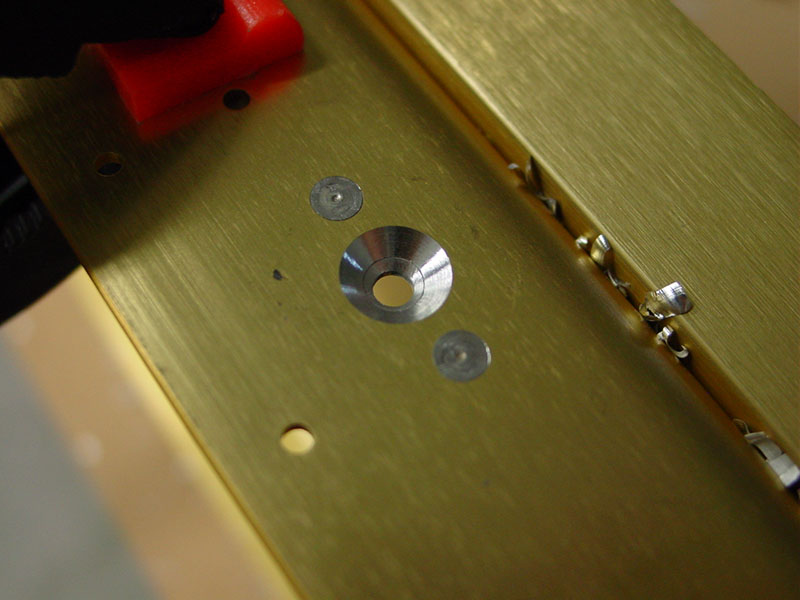
Began work on the wing kit today, by drilling and riveting half of the tank attach nutplates. Completed the upper side of both spars. I made a jig for countersinking the #8 screw holes out of a cut-off piece of 1×1 angle by drilling a nutplate to it, and putting a #30 hole (to match the countersink pilot). Clecoing it to the spar didn’t work, as it blocked the countersink cage, but dropping two rivets in the nutplate attach holes, then fixing the jig in place with a clamp, worked well. This reduced the chattering of the countersink cage, since the pilot doesn’t run out of material as it would if you had only the thickness of the spar flange. It produced decent holes.

The process – ream the rivet holes to #40, deburr the bottom, countersink the top. Attach the jig and countersink the center hole for the screw, and debur the bottom. Spot prime with a Q-tip dipped in primer. When dry, cleco one leg of each nutplate, rivet the opposite side, then remove clecoes and squeeze the second rivet.

There are 62 tank attach screws/nutplates on each spar, plus inspection plate holes on the bottoms. I also discovered (looking ahead) that one of the holes that should be open to bolt on the tie-down fixture is filled with a rivet on the left spar. I assume this will just get drilled out, but that’s a massive rivet.

Hours: 3.8 | Posted in Spars & Skeleton | Comments Off

5th July 2008

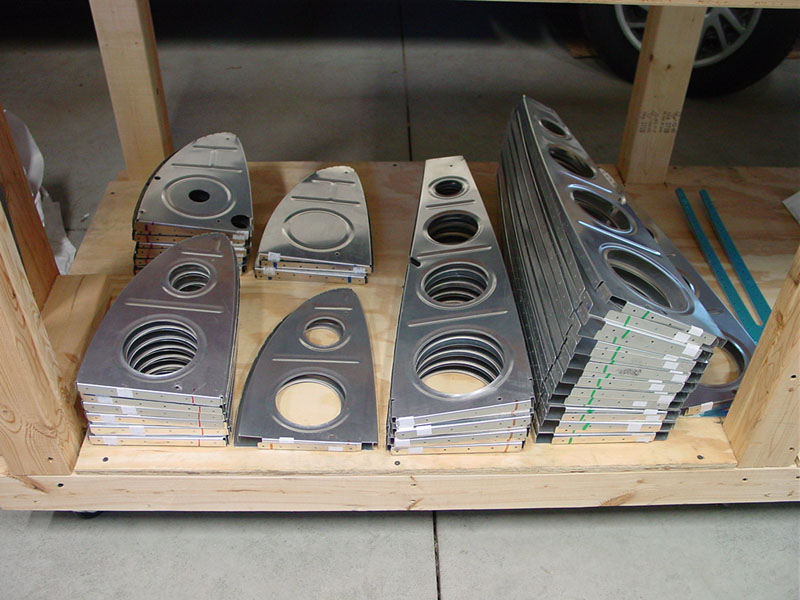
Wing inventory complete

Inventoried the remaining portion of the wing kit this evening. No damage at all, and only one minor discrepancy on the inventory–the packing list includes a hardware bag named “Bag 1923,” but I received “Q Bag 1923.” The difference is that “Bag 1923″ is supposed to include 6 K1000-4 nutplates that are not included in the “Q Bag.” The bag is just labelled as “misc. hardware,” so I’m not sure whether this is a goof, or a change.

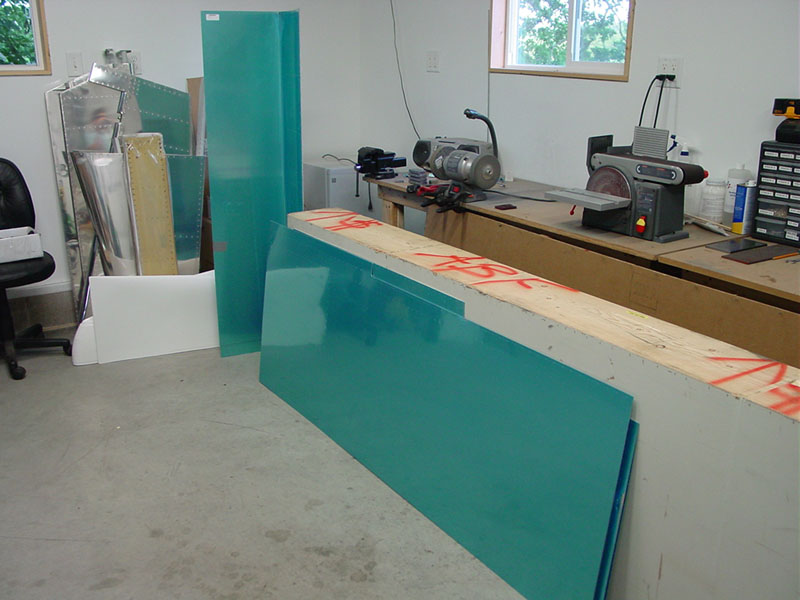
Lots of ribs are stacked up to await their deburring, and the large parts are stored in the spar box for now. I’ll have to come up with a decent way to store the skins and long angles, as having the crates in the shop isn’t going to work.

Hours: 1.3 | Posted in Wings | Comments Off

1st July 2008

Wing hardware

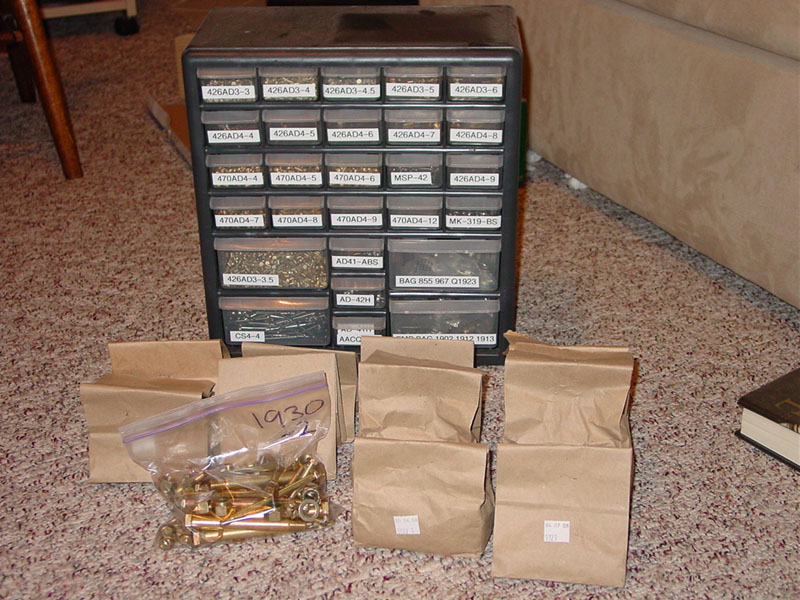
Killed some time this evening by opening up the sack of wing hardware and sorting through it.  That’s a lot of rivets.  Also sorted the bulk rivets into the drawer organizer and labeled it with the trusty P-touch.  The rest of the hardware will stay in their bags, since they seem to be grouped by area (ailerons, flaps, fuel fittings, etc), which is logical enough–and keeps me from buying another organizer!

Hours: 1.9 | Posted in Wings | Comments Off

1st July 2008

Elevator fix-it

Today I received a reply to my query to Van’s regarding the twisted elevator problem. From Ken Scott:

This is a significant twist, but we have no test data that would enable us to know how much twist is too much. We haven’t built elevators with different twists and flown them, in other words.

We know there are RVs flying with twisted elevators and nothing bad has happened, but again, how much is too much?

You have two options:

1. rebuild the elevator to the intended configuration. This doesn’t necessarily mean building an all-new elevator — just drilling out rivets until you can straighten the one you have would probably work. No flight risks here — we know straight elevators work.

2. fly it the way it is and let the airplane tell you if it needs to be changed. Problems would most likely show up as rigging/trim problems rather than structural ones. Some risk here, as we really can’t say what the flight characteristics might be

Pretty much what I expected to hear, though perhaps not what I was hoping to hear. So, in reading that and thinking about it, I decided to take a look and see how difficult it would be to fix the thing, rather than hoping it would work and (possibly) having to fix it later. I’m a semi-reformed perfectionist, and every once in awhile I have these tendencies. (If there’s one place I don’t mind having perfectionist leanings, it’s in the building of the plane…)

Out to the shop I went, and did some checking at various places on the table (which I’ve come to believe isn’t perfectly flat, and is probably the cause of at least some of the twist), to determine how and where the twist was built in. I drilled off the skin from both the root and counterbalance ribs first. Not enough. The trailing edge had to come undone too, and I believe this is what happened: the skin closure at the trailing edge wasn’t perfectly even when drilled originally, rather the top sheet was offset to one side, which caused the whole thing to twist.

In case there’s a question, applying heat to Proseal does not cause it to become more fluid; it just gets hot. I tried this on some scrap angle which had the stuff on it from when I sealed the TE’s, with no luck. There wasn’t enough “give” in the Prosealed trailing edges to let it move enough, so I ended up using a thin flat ‘blade’ of sorts to split the bottom skin from the AEX wedge. I didn’t spread it enough to disturb the ends of the stiffeners which had been sealed together, nor did I disturb the top skin.

Next I clamped the whole thing to the table quite well, used a 4′ level and spare angle to prove that it was flat, and proceeded to re-squeeze rivets into the trailing edge, using the same approach as used the first time. Also squeezed a few rivets in each end rib. Initial testing after the clamps were removed looked promising, so I squeezed the rest of the rivets, and pulled the blind ones (which I had to steal from the wing hardware, so I suspect I’ll need to order some extras). Yes, my elevator has one more blind rivet than it did before, because I got carried away and drilled out an inaccessible rivet (one of the counterbalance skin to elevator skin rivets on the inside of the end rib)…the other four are at the hard-to-buck ends of the ribs.

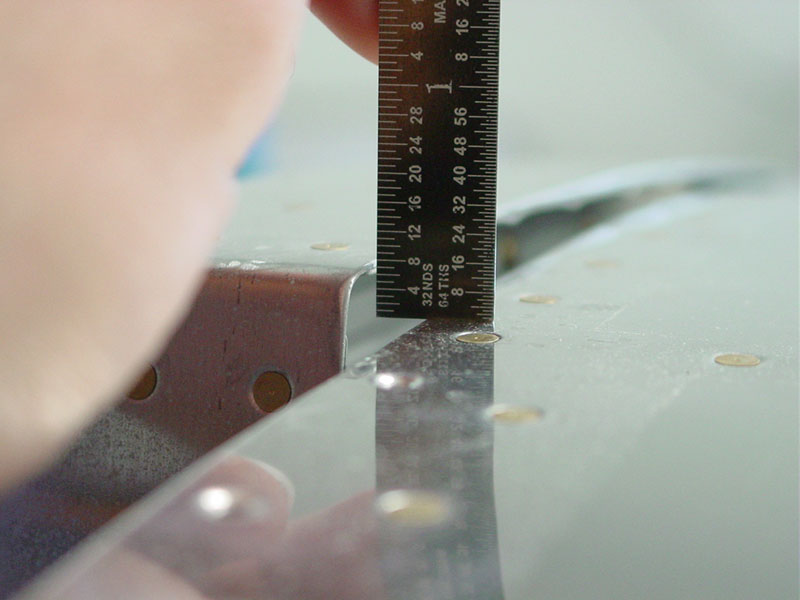
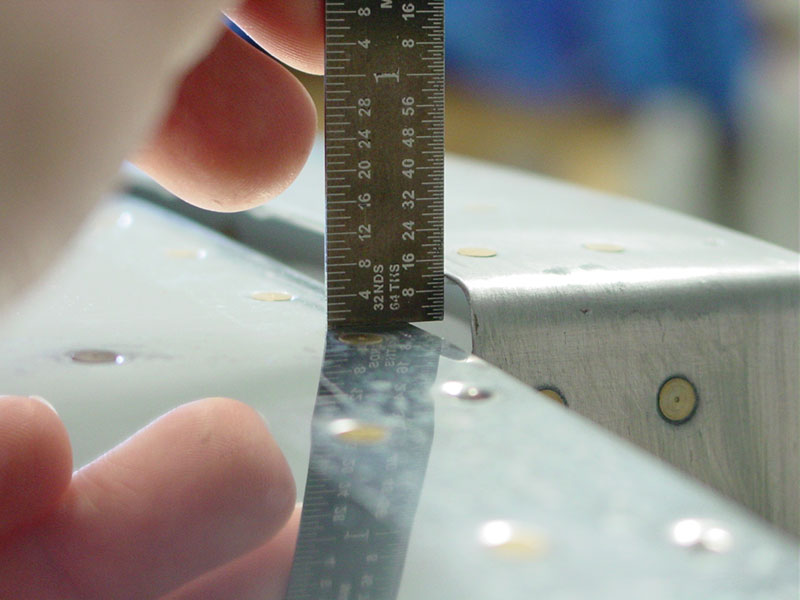
Test time…I expect the problem to be improved but not perfect. Cleaned up the table and brought the HS back up, the proceeded to hang both elevators. Clamped the counterbalances in trail, clamped the long angle across both elevators. In my hand, it looked mighty close… Rested the center of the angle (behind the control horns) on the shop chair, and took the ruler in hand to compare the two sides (the chair doesn’t go high enough to get the counterbalances flush, so I measured the height of the counterbalance nose above the HS skin. Left…6/32″. Right (rebuilt)…6/32″.

I’d call that fixed. Almost three hours, but well-spent both in solving the problem, and in regaining my confidence.
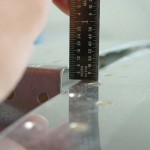
(despite how it looks in the photo, the right one did measure around 6/32″; I was supporting the camera on the HS with one hand, which caused it to tip down and increase the gap.)
Hours: 2.8 | Posted in Elevators | Comments Off

28th June 2008

Empennage endgame

Minnesota Wing meeting was this afternoon at Crystal Airport; spent a couple hours and talked with several folks from the local area. The weather wasn’t the best, so only a couple fly-ins showed up. 7A builder and RV Hotline editor Bob Collins has a write-up with pictures here…if you look carefully, you can see my arm & leg.

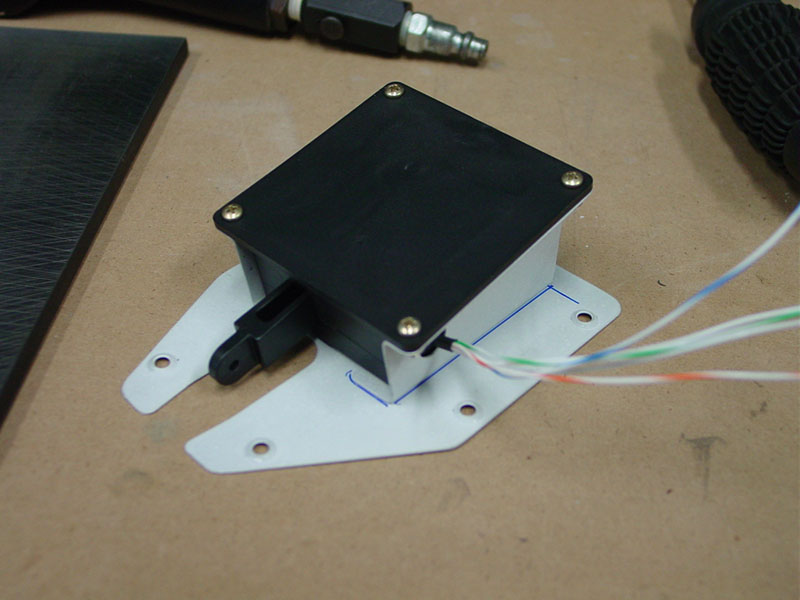
Installed the trim tab motor when I got home, and spent some more time staring at the elevators before disassembling the empennage in preparation for storage. Not entirely sure how I’ll store them yet, but I believe they will go into the attic and either rest in the trusses or lay on some old blankets that I have up stored up there. I thought about hanging on the wall, but that seems like more work, and I would eventually like to put up shelves along the upper walls of the shop. I put the appropriate bolts/washers/nuts (loosely, not tightened into the locking portion) in the brackets on the HS & VS, to avoid the inevitable question “now where did I put those bolts?!” when it comes time to mount them up later.

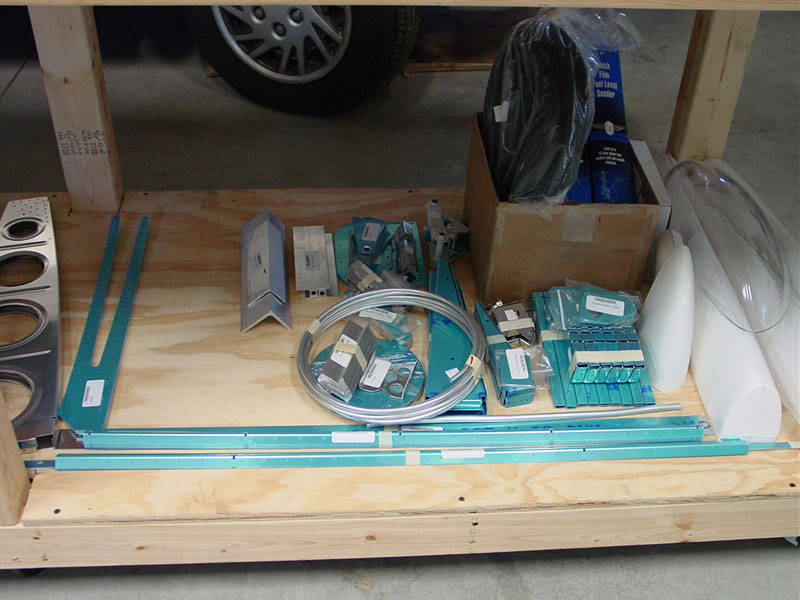
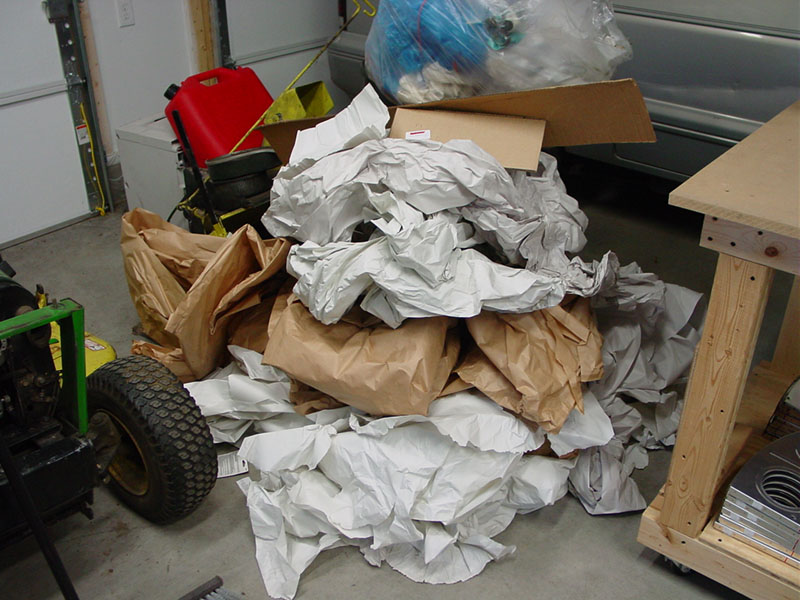
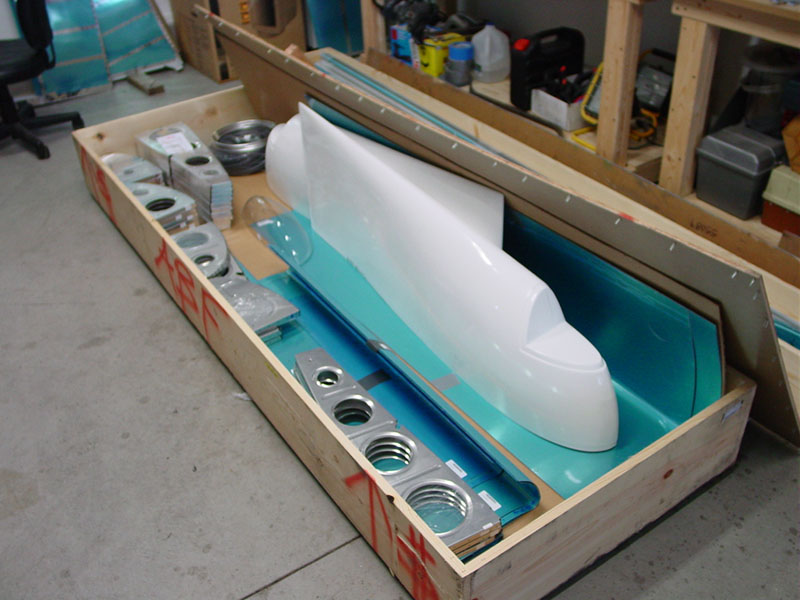
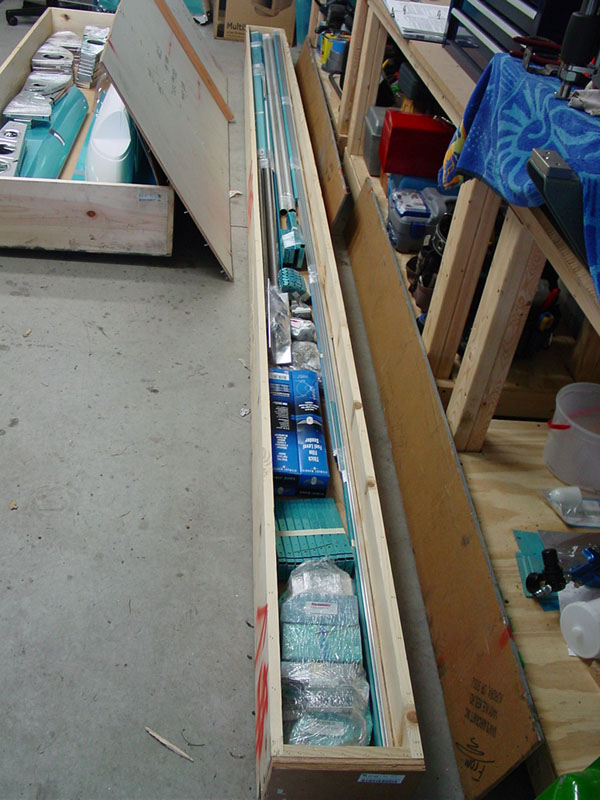
Also began to poke through the wing kit, removing packing paper and discovering interesting bits like fuel caps, fuel senders, tie-down bars (I’m gonna need to get me a tap for those), wingtip lenses, and nice golden spars. The next session will likely be wing inventory, cleaning up the workspace, and stashing the wing parts. The hardware bag for the wing kit is the size of a Target sack…might need another multi-drawer storage box. The wing components seem very thick (skins, ribs, etc) after being used to the relatively lightweight tail surfaces.

Hours: 0.8 | Posted in Empennage, Wings | Comments Off

27th June 2008

Elevator miscellany

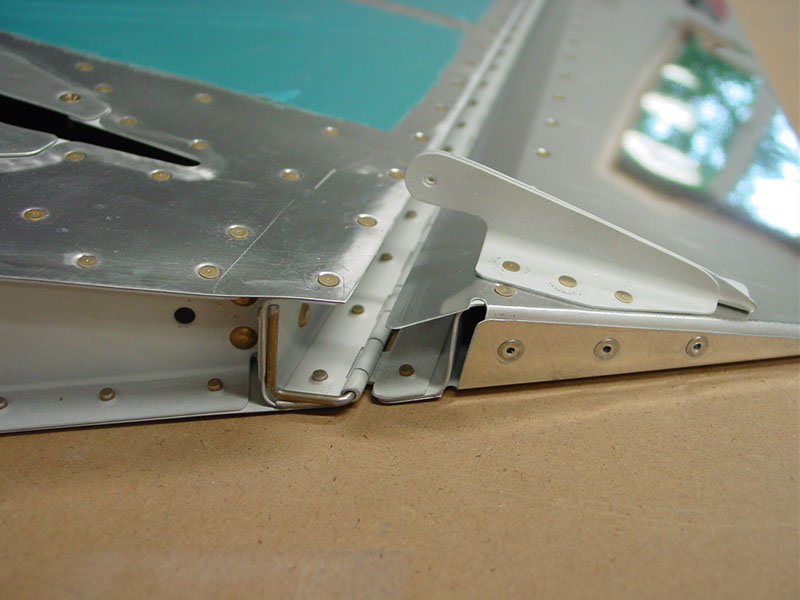
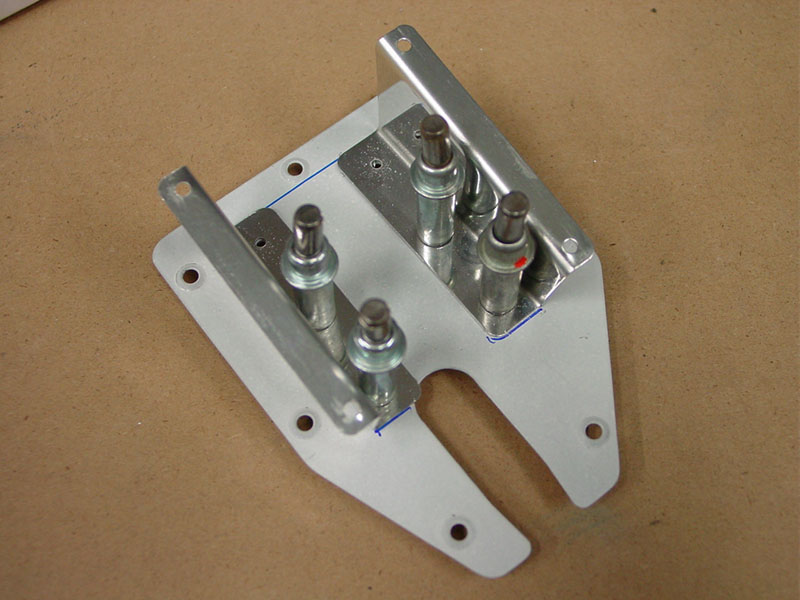
Finishing up random elevator tasks today…mounted, drilled, primed, and riveted the brackets for the trim tab motor, then set it aside for now. Mounted the trim tab and marvelled at the moving part! Pulled all the plastic off the empennage components for storage, and took a crack at hanging the elevators on the horizontal stabilizer.

I adjusted the rod-end bearings to their proper length and reamed out the holes in the brackets for the bolts (the powdercoat clogs the holes somewhat). It was here that I discovered an issue…

It seems that when both elevator counterbalance assemblies are clamped “in trail” (aligned with the horizontal stabilizer), the right trailing edge is about a half inch higher than the left. They’re both straight, and the gap is consistent along the whole length. Playing around with a 4′ level, I checked both elevators for flatness and eventually came to the belief that the right elevator is twisted. The result is that either the TE’s match, and the counterbalances are split, or the counterbalances match, and the trailing edges are split.

I did some searching on the various online resources, including VAF and builder logs, and it seems that this problem isn’t unheard of. The opinions on its solution vary widely, however-some state that it’s no problem at all, others say it will cause a rolling moment which will always need opposite aileron to counteract it. Some claim it can be fixed by drilling out some rivets and “massaging” the end rib, others report they built a whole new elevator. RV-9A builder Mike Hoover had a similar problem which he wrote about on his build log (related thread at VAF), and included advice he received from Van’s:

Talked with Scott at Vans about the misaligned TE on the elevators as they are currently mounted on the HS. He suggested three alternatives: 1) leave as is, if any undesirable flight characterists, then use the second alternative. He said this happens frequently to varying degrees and may not be that noticeable in flight. 2) Align the TEs, reposition elevator horn bolt holes as required and accept the downward position of the left elevator counterbalance or the upward position of the right one. 3) Remove the elevators, find where any twist is that is causing the misalignment, [and] work the twist out by using more rivets, which will result in the elevator having pre-loaded stresses.

I believe he had already drilled his elevator control horns when this problem was noticed, which put his counterbalance arms in trail, but left his TE’s split. I would be able to go directly to option #2, which would align the TE’s and split the counterbalances. In any event, I have sent an email to Van’s builder support, and await their response. I suspect it will be some variant of the above, and the problem is not as big as I imagine it to be. From the above linked VAF thread:

I ended up with about 3/8 vans said, you won’t know it during flight, many rv’s have this problem, (we all start on the emp) also he said only you will know it so at the fly in’s or when you go somewhere other might see it, just tie the stick back with the seat belt so they are not aligned and no one will ever know. build on..

OTOH, if I need a new elevator…well, that’s life I suppose.

Hours: 3.0 | Posted in Elevators | Comments Off

26th June 2008

Trim tab done

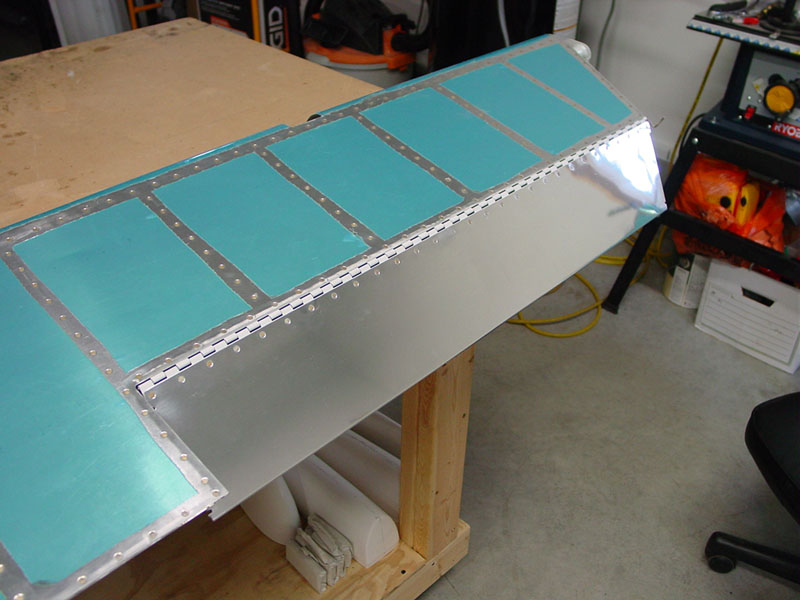
As planned, I was able to rivet, epoxy, and clamp the trim tab this morning. It’s weighted down to the flat table while the epoxy sets. The package claimed 30 minute set, 7 hours to handle, and full cure in 24 hours–which will be about when I next have time to play with it. I also riveted the hinge to the elevator, bent the pin, and drilled the safety wire hole in the rib. Just a few things left to finish the tail…attaching the elevator weights, installing the trim motor, and fiberglass.

I did find a bit of light corrosion starting at the edges of the trim tab when the plastic was removed for riveting, so that will have to be polished off. This is a “known issue” with leaving the plastic on; one of my next steps will be to pull the plastic off all the finished empennage parts, since they’re pretty much done being moved about, and won’t need the scratch protection.

Hours: 1.7 | Posted in Elevators | Comments Off

25th June 2008

Trim tab primed

Primed the trim tab components. The rib locations were masked off so that the adhesive (I will use some epoxy) has a better surface to stick to. From here, it should be a quick job to finish out the tab, and thus, the empennage! (Well, except for the fiberglass…)

The AFS primer/sealer works really nice in weather like this; you can keep moving at a good pace since the light coats dry quickly. (Today: scattered clouds, 86*F, 43% humidity, and a light breeze.) The last priming session wasn’t so much fun, since the humidity was high (90%+) for several weeks, and things were taking forever to dry. I had to touch up a couple spots where fingertips had goofed up the coating. Today, by the time I had sprayed the last pieces, the first pieces were ready for their second coat. I’m quite happy with this stuff.

Hours: 0.4 | Posted in Elevators | Comments Off